From TQH and Nipman Foundation | Edition Twenty Three
From the Director’s Desk
Dear Reader,
Welcome to the twenty-third edition of AccessPoint: Monitoring Policies, Advancing Access, your one-stop fortnightly newsletter for all news related to disability and policy.
The lack of understanding about learning disabilities here is hard to miss. Newsom has long spoken publicly about having dyslexia, not as a limitation, but as something that has shaped how he learns and leads. And yet, in a single move, that difference was reframed as disqualification.
The outrage these comments generated globally is understandable. But the uncomfortable truth is this: Trump is not alone. The idea that learning disabilities signal incapacity is not confined to political rhetoric in the United States. It also exists quietly and persistently within our classrooms, our workplaces, and our institutions in India.
A learning disability affects how the brain processes specific kinds of information, such as reading, writing, numbers, or auditory input. It says nothing about intelligence.
About 8–10% of children in India have specific learning disabilities. But who gets diagnosed tells its own story. Across studies, boys are identified far more often than girls, sometimes two to four times as often in conditions like ADHD. It’s not because they experience more difficulty, but because their struggles are more likely to be taken seriously. None of this determines a person’s capacity to think, lead, or contribute. And yet, we rarely hear this said out loud.
While Newsom has spoken openly about his dyslexia, no prominent Indian political leader has ever publicly acknowledged having a learning disability. In public life, such conditions are still treated as something to be managed quietly. That silence is its own kind of data.
Most children with learning disabilities in India are never diagnosed, especially outside urban centres. No diagnosis means no accommodation and no access to legal protections. The RPwD Act is only as meaningful as a child’s ability to access it, and right now, that access is deeply unequal.
Even where provisions exist, they remain difficult to navigate. CBSE offers scribes and extra time, but only with certification from government-recognised hospitals: a process that itself becomes a barrier for many families. The National Education Policy 2020 mentions learning disabilities just once, and only in the context of teacher training, with no substantive commitment to flexible curricula or alternative assessments. Meanwhile, India’s most widely cited annual education survey collects no data on children with disabilities at all.
This gap between recognition and reality spills over to employment as well. In Sudhanshu Kardam v. Comptroller and Auditor General of India, two candidates, one with a Specific Learning Disability, cleared the SSC Combined Graduate Level Examination on merit. Yet their appointments were denied, based on an outdated list of eligible posts.
The Supreme Court was unambiguous. There was no legal basis for rejection. If posts were already filled, supernumerary positions must be created. Yet, the question remains: why did it take a Supreme Court judgment for candidates who had already proven their merit to access employment? What we see—across education and employment—is not a lack of ability but a system structured around exclusion.
Dignity for persons with learning disabilities should not depend on becoming a public figure or on winning a court case. It should not be earned through exception. It should be guaranteed by design, in every classroom, every recruitment process, and every policy room in the country.
Warm regards,
Nipun Malhotra
Director, Disability Rights & Inclusion (TQH) | Founder, Nipman Foundation
This newsletter is supported, in part, by Mariwala Health Initiative (MHI), a grant-making organisation that advances inclusive, rights-based approaches to mental health by centring lived experience and examining mental health within its wider social and structural contexts.
If you’re interested in supporting this work, please reach out to us at office@thequantumhub.com
This edition captures the key updates from March 14 to March 26.
Now let’s dive into the highlights:
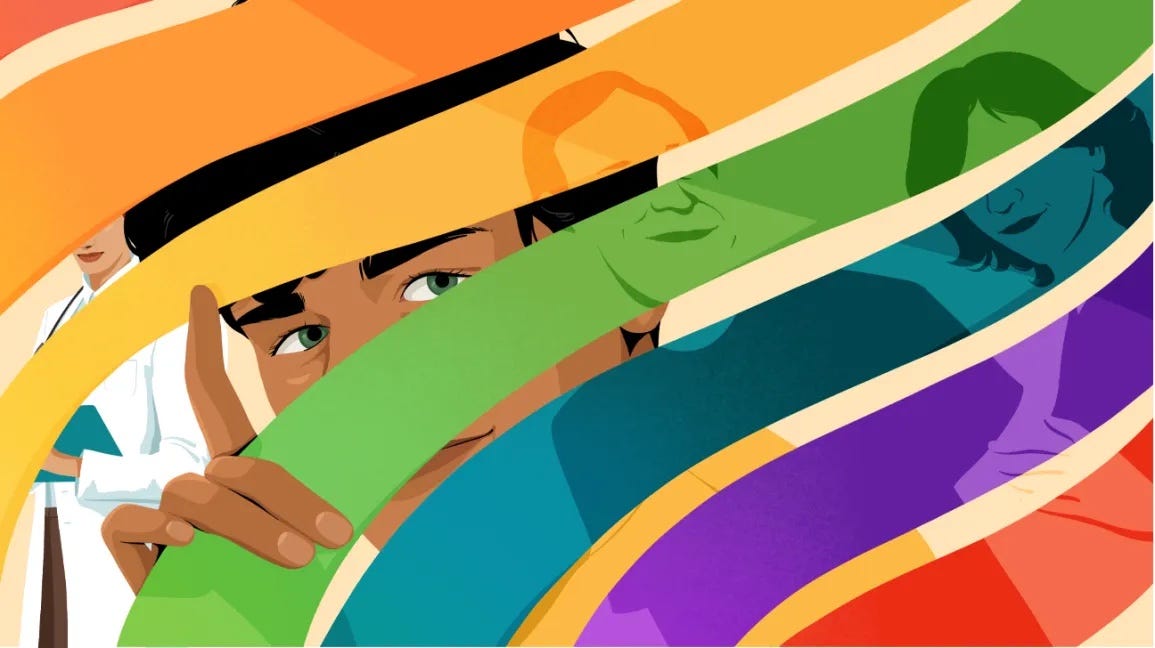
New Trans Framework could undermine mental health- The Transgender Persons (Protection of Rights) Amendment Bill, 2026 has been passed by Parliament amid criticism from opposition and civil society over risks to healthcare access and dignity. Stricter identity verification may deepen exclusion—heightening mental health risks, particularly for trans persons with disabilities.
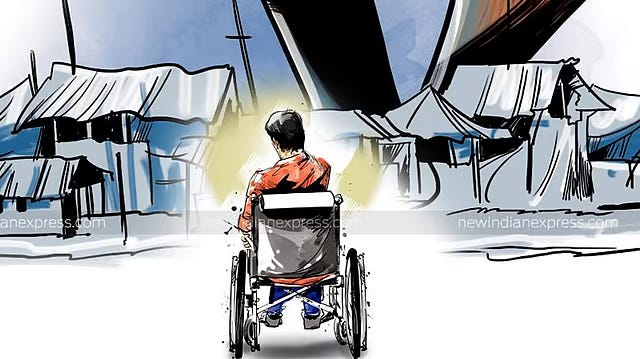
Supreme Court strikes ceiling cap on disability- In a significant verdict on inclusive public employment, the Supreme Court held an upper limit on the percentage of disability for recruitment as unconstitutional. The court reiterated that RPwD Act set thresholds at the minimum percentage to include PwDs, not to exclude those with a higher degree of disability who can otherwise perform the core function of a post.
MIB Mandates subtitles and audio descriptions for theatrical releases- The Ministry of Information & Broadcasting has mandated all films to have accessibility features, like subtitles and audio-descriptions, to be eligible for a censor certificate from 15th March 2026 onwards. At the same time, OTT Accessibility Guidelines that we highlighted previously have been challenged in the Delhi HC, contending dilution of the implementation structure which is against the time-bound compliance mandated by the RPwD Act.
Education and employmentelude PwDs- The Central Bureau of Investigation has unearthed discrepancies worth crores in disbursal of central educational scholarships for students with disabilities. A disturbing example of how growing scrutiny over fraudulent disability certificates seemingly does not aid PwDs to access opportunities that are rightfully theirs.
Digital certificates for more disabilities in Andhra Pradesh- Andhra Pradesh has introduced digital certificates for five additional disability categories, finally bringing coverage to 21 disabilities (from 13). The state will also digitise manually issued certificates for haemophilia, thalassemia, and sickle cell disease. While the RPwD Act recognises 21 disability categories, this change highlights that implementation remains state-driven and uneven.
Subscribe to this newsletter for fortnightly updates on the disability ecosystem.
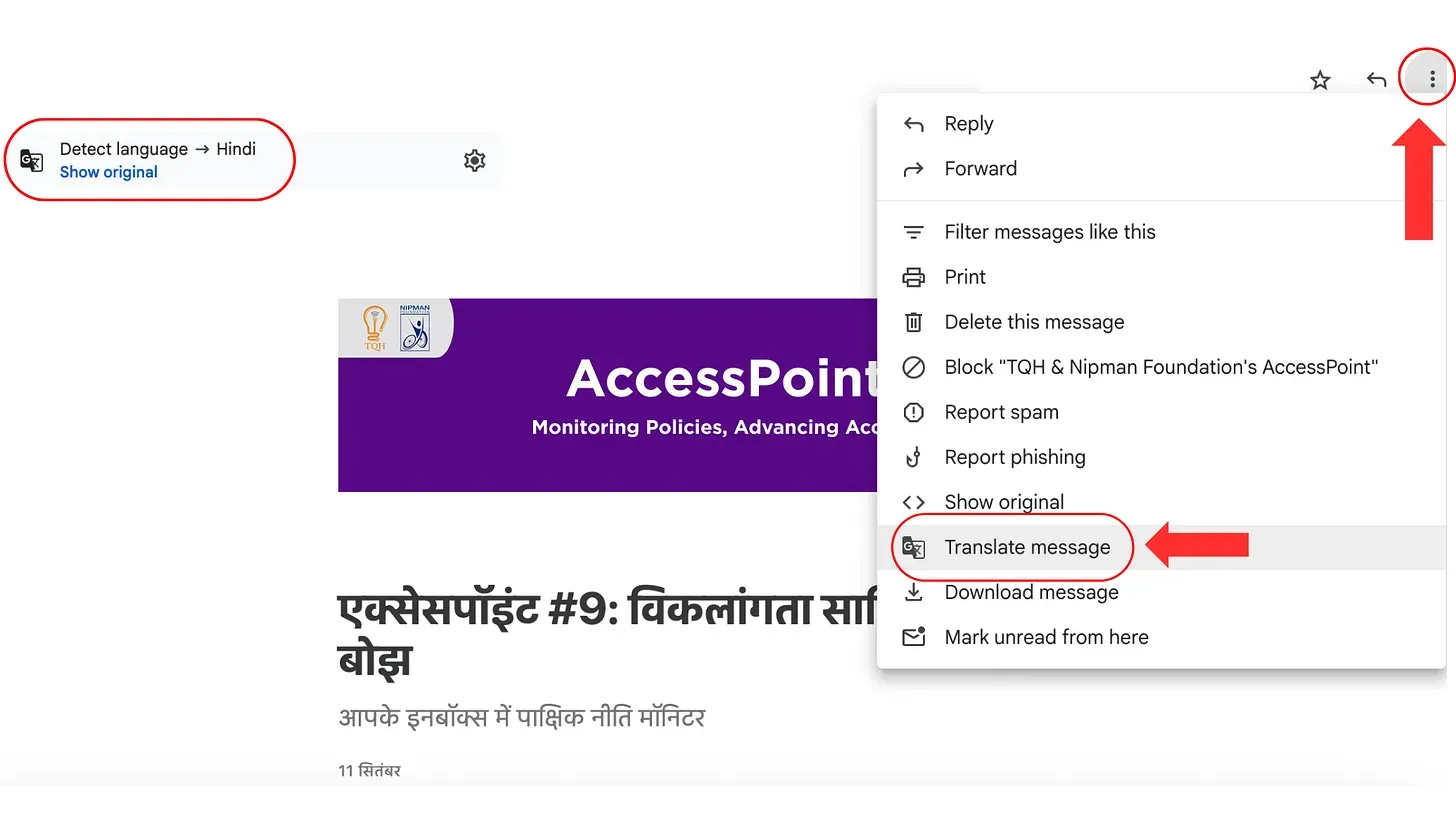
If you are reading this in Gmail, to translate the newsletter, click the three dots in the top right corner of the email, select Translate Message, and choose your preferred language.
Nipman Foundation is committed to ensuring that individuals with disabilities have access to mobility devices, job opportunities, and an ecosystem that promotes dignity and happiness. Specifically, it focuses on Accessibility, Attitudes, and Affordability to make a lasting impact.
The Quantum Hub (TQH) is a public policy research and advocacy organisation that engages with businesses, policymakers, philanthropies and think tanks to inform and shape policy.